Wednesday, June 2, 2010

World Cup 2010: Africa Arise!!!

It is time for Africa to take her place in world football as the World Cup kicks off.

It is with great joy that I write as the World Cup kicks off in South Africa next week. We have waited for more than six years in anticipation of our turn to host the world’s most important sporting event.

Every fours years the stars of football come out to shine at the World Cup and this time we have the opportunity to host them on our land with our impressive cultural heritage.

Africa welcomes the world to this great continent of beauty, hopes and dreams. We open our arms wide and we say welcome, Akwaaba, Ekaabo, Sanu da zuwa, and Sawubona to everyone that will be visiting our continent during this period.

Football is more than a sport, it is our life blood in Africa. When our national teams play we forget all of our differences and gather round with one goal in mind, victory.

We follow with every breath and every blinking of the eye as our stars kick the ball all over the field. We forget our ethnicity, our religions, our prejudices and hug each other on the streets whenever our teams score.

Football has been a force for good in our continent. It has brought an end to wars. Ask Didier Drogba how he was able to bring peace to his former troubled Ivory Coast. See how the great Pele made the warring factions in Nigeria declare a ceasefire just to see him play during the Biafran War.

Football is more than a sport, it is a passion. The World Cup is the biggest shrine of football and it is where many of us dreamed of being as kids. To see our heroes play means more than a thousand treasures.

As the World Cup begins in our Africa this week, I will be supporting my team the Super Eagles to victory. No matter what happens during the tournament, I will be the number one fan of the Super Eagles. And if the Eagles fail to make it further, I will support football.

For football is much more than nationality, it is a lifestyle, it is a religion, it is a calling and a gift to mankind. Football is a force for good for us so let us embrace this beautiful gift that has been given to Africa and rise up to celebrate it.

It is our time.

Monday, May 17, 2010

Goodluck Jonathan is no messiah

Goodluck Jonathan says he will set up a facebook account to meet with his constituents online. Do they have electricity to log on to facebook?

I say do not expect much from a man who has gotten everything in politics without lifting an arm.

He is not a spectacular person and we should stop hailing him like a messiah.

The only thing has going for him is that after a long time under the slow Yar Adua, we now have a president who is healthy and can walk without stumbling, can talk without sneezing and can clap without needing to have drips passed into his veins to regain energy afterwards.

What did he achieve as governor in Bayelsa? These are the questions we should be asking ourselves.

We should begin asking him to deliver on electoral reforms so that at least we have credible elections next year.


Saturday, May 15, 2010

Do I come to you by chance? No I don't.

Just left a reading by Nigerian writer Adaobi Tricia Nwaubani. She's the author of the award winning I Do Not Come To You By Chance (Commonwealth prize for first book Africa region).

Nwaubani has got a lot of humour in her. Her book is a fine read with a lot of street sense. It is a world where the people who speak the grandest of grammars and possess the most polished certificates end up surviving on paltry pensions while the ones without any pretence to civility live large and even quote the Bible to support their ill gotten wealth.

She makes the reader laugh and told the audience that she grew up on reading comedies hence her seamless dive into writing serious issues in a funny way instead of the usual African writers’ seriousness.

Saturday, May 1, 2010

Dakar: Meet Senghor’s Enchanting Woman

Me standing with a guard in front of Senegal's presidential castle

Naked woman, black woman

Clothed with your colour which is life,

with your form which is beauty!

In your shadow I have grown up; the

gentleness of your hands was laid over my eyes.

And now, high up on the sun-baked

pass, at the heart of summer, at the heart of noon,

I come upon you, my Promised Land,

And your beauty strikes me to the heart

like the flash of an eagle. - Leopold Sedar Senghor, “Black Woman”.

The flight into Dakar was smooth. The Virgin Nigeria cabin crew was as helpful as they could be considering the low temperature in the cabin. Their warm laughter made one forget the cold. However, nothing prepared us for the biting weather that welcomed us into the Dakar night sky for it was too chilly for an African country bordering the equator. Temperatures outside the plane were put at 21degrees when many other West African countries are generally at the 30degree mark.

That was our first pleasant surprise as we arrived at Senghor country for a training course organized by FIFA/AFP Foundation to help build up the capacity of African reporters for the World Cup in June. Three TELL staff, Arukaino Umukoro, Tony Onwuemene and I had been selected to represent Nigeria in the training scheme. Senegal bears a lot of tribute to its founding president, the poet-leader, Leopold Sedar Senghor. The international airport bears his name as well as the big wide boulevard in central Dakar where the Palais Presidentiel, the presidential castle, is located. Senegal owes much of its philosophy to Senghor who was the progenitor of Negritude, a cultural movement that celebrated the idea of blackness in the face of racism in colonial France. Till date, the legacy of Senghor is prevalent in the way that arts and culture are celebrated in the country.

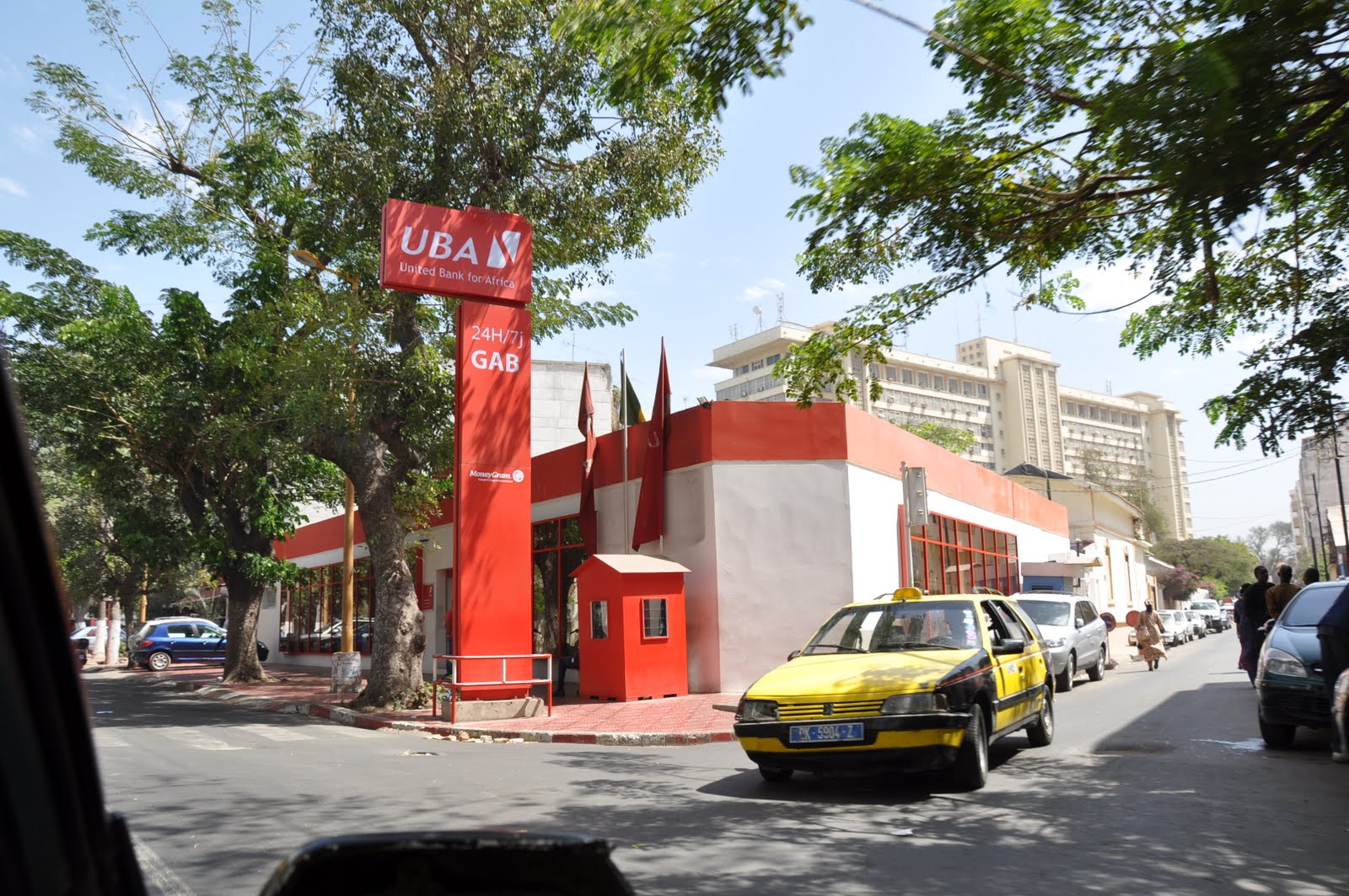
Dakar itself is a beautiful woman whom a first time visitor easily falls in love with. The streets are generally clean with impressive architecture that relies on its French heritage and I dare say that if one were to be blindfolded and dropped in the centre of town, one may be forgiven for thinking that it was a European city. In many places the roads are not big but they are effectively monitored to ensure that there is no traffic build up. And the high rise buildings are constructed with very good use of space so that there need not be fences taking over valuable space.

The people I came across were generally friendly. Being a French speaking country, it could be hard to get your message across but with my basic knowledge of the language gotten from spending several months at the Alliance Francaise in Accra, I did not have to suffer too much before getting my opinions across to waiters, taxi drivers, traders and policemen. After just returning from Lome where I had gone to report the Togolese presidential elections, a trip to Dakar was just what I needed to keep my new found opportunity to constantly practice my French. For every one who has ever learnt a language knows that the best way to go about it is to speak constantly for when there is nobody to speak with one readily forgets. So I did parler a lot to the consternation of many of the other Anglophone journos on the course.

One of the most memorable events that I will remember from my Dakar sojourn is that of visiting the Palais Presidentiel alongside colleagues from Nigeria, the Gambia and Liberia in the midnight. Being such an easy going people, the presidential castle is a tourist centre of sorts, one can take pictures in front of it during the day. Nevertheless, our first visit to the castle was at night and we were stopped by guards who demanded to know what our mission was. Our Gambian colleagues who share the Wolof tongue with the officials bailed us out. We were told to come back during the day if we wanted to get pictures of the beautiful white building. Entreaties from our Gambian friends fell on deaf ears. “Can you go to the house of Yayah Jammeh like this” asked the guard to which Musa Lammeh responded in the negative. They were very civil in turning us away. At that moment I thought about the fortress which our Aso Rock is at home and wondered if one could ever cross its many gates without an invitation.

So two days later we finally visit the palace again at the end of our interesting training programme that had been conducted by Barnaby Chesterman, a Rome-based reporter with the Agence France Presse, AFP. This time there was a guard who cut a solitary figure in his red and blue uniform, a gun strapped across his chest with a cavalier red top hat in front of the imposing almost 15 foot high metal gate that enclosed a palm tree lined path which led to the castle. He never smiled throughout as we took permission to take pictures with him. His sense of duty was so important that all he did was nod for us to go ahead. And we shot away, clicking our cameras like wide eyed tourists. It was a beautiful moment in time.

Perhaps most enchanting were the women of Dakar, dressed in their usual kaba, they looked splendid. It was of their enchanting beauty Senghor sang in his many poems in remembrance of his homeland.

Dakar is brimful of beautiful women for it is beauty personified. Walking down its streets sometimes felt like running a hand through the newly braided cornrows on a woman’s head. It was a journey of discovery. Contrary to Conrad’s description of Africa as being the "heart of darkness", Dakar and so many other cities on the continent do actually possess beauty that we all can be proud of.

Friday, March 5, 2010

Togo's presidential elections - Africa's 50 years

+Togolese women waiting to vote yesterday at Lycee Be-Kpota: Photo by Ololade Adewuyi

Togolese went to the polls yesterday to vote for candidates into the presidential palace. Incumbent Faure Gnassingbe and opposition's Jean Pierre Fabre are favourites for the office that has become a dynasty for the Gnassingbe family.

Faure's father Eyadema was president for 38 years, Africa's longest serving head of state, and Faure himself has already served one term of five years since taking over after his father's passing in 2005.

I am at the lobby of the Palm Beach Hotel in Lome overlooking the beautiful Atlantic ocean thinking how important it is for Togo to get this poll process right in the year that it turns 50. A total of 17 countries in Africa will clock five decades this year and Togo's success at the polls will mean that it should bode a good year for all.

Already we have seen how a coup d'etat has dislodged the government in Niger last month. Niger is among one of the 50 year olds but the coup has set it backwards now.

African leaders need to know historical timing and that the world is watching them in this very important year. The success of Togo's polls will go a long way to telling the world that Africa can indeed take care of its affairs properly.

Bon chance Togo. Viva Afrique!

Saturday, January 16, 2010

An AbdulMutallab Year!

*Photo: Young men walking on the streets of Funtua,
AbdulMutallab's home town. Many are turning to religion
as a means of getting away from the hardships that mar daily living.
Photo by Ololade Adewuyi.

The year 2009 ended on a low for Nigeria with the attempted airline bombing by Umar Farouk AbdulMutallab. Sad to say anyway but I think we should look more closely at the incident to see that young Nigerians are increasingly turning to religion as an elixir for the failings of their leaders.

Even though it's been proved that the boy got radicalised in London where he schooled, many of our universities are becoming playgrounds for radicals theses days.

I attended the Obafemi Awolowo University, Ile Ife and know how well Islamist extremism is going on in that campus. I remember when Sharia law was introduced in the north in 1999 and how many Muslim groups began to call for the introduction of Sharia on our campus and how it could have degenerated into something bad if the Christian groups had reacted otherwise.

I remember all the Jihad weeks on the campus and how at the car park bordering Angola, Awo Annex and Mozambique halls mullahs would scream into loud speakers denouncing Jesus' claim as the son of God.

There was a time in my final year when a religious broil almost broke out among the younger students during the Ramadan when a Christian student complained of the noise making that ensured in the early hours of the morning because it was also exam time. It's sad that our university is fast becoming a breeding ground for extremists, Christians and Muslims alike.

Fanaticism came to its head when some Christian students sometime ago decided to go into the forest to await the coming of Christ!

When shall this all end?

Sunday, November 22, 2009

The Art Matriarch

Frances Ademola tells the story of how art has evolved in Ghana forty years since setting up her gallery The Loom.

By OLOLADE ADEWUYI


From the creative ambience inside of her forty year old gallery called The Loom on Kwame Nkrumah Road, Adabraka, Accra, Frances Ademola has over seen the Ghanaian art industry and watched it evolve over time. Returning to Accra in 1969 after a 12 year sojourn in Nigeria where she had been married to the late Adenekan, son of Sir Adetokunbo Ademola, former chief justice of Nigeria, she found out that the Ghanaian art scene could do with some tinkering. Stimulated by the creative atmosphere of Ibadan where she had resided, she craved to re-enact something of that nature in Accra.

“I was stimulated by Nigerian art and creativity and was curious to find out more about the art of my country” says 81 year-old Aunty Frances as she is fondly called by many. Ben Enwonwu, Bruce Onobrapkeya and Jimoh Buraimoh among many others were some of the major artists that she recalls coming into contact with during her sojourn in Nigeria. She had also worked as an assistant to author Chinua Achebe at the Talks Department of the Nigeria Broadcasting Corporation as well as edited an anthology of Nigerian poetry and prose titled Reflections that was published by the African Universities Press.

Hence, when she returned to Accra she set up The Loom, the premier privately-owned and run art gallery in the city. Forty years later, the fruits of her labour can be found around the gallery which now houses the works of about 120 artists, mostly Ghanaians. It was a different ball game when she commenced business in 1969 as there was a dearth of local artists. “When I started I could count the number of artists on the fingers of two hands” she says. The more notable artists were the ones who had come in through the academia like Ablade Glover, Ato Delaquis, Ben Offei-Nyarko and Larry Otoo. She feels the encouragement that she has given others outside of the academic environment has made more artists come out into the open with their unique creative eye different from those that attended art schools. Even then Ademola says most of the artists who were teachers have now opened their own art schools as an avenue to train artists who do no not have the requisite qualifications to enter academic institutions. “Art is no longer the preserve of the educated or elite” she says “everybody can (now) be an artist. I encouraged that revolution” she says with pride. “She has made immense contributions to the development and growth of art in Ghana since the 1960s and also helped create a forum for intellectual discourse of art” says John Owoo, a prominent Ghanaian culture writer and journalist.

Even though Ademola misses the vibrancy of the Nigerian art scene which she still keeps up with during visits to the country, she thinks Ghanaian artists are increasingly coming to their own. She feels that the reason for the vibrancy in the Nigerian art environment was because many Nigerians stayed true to their roots and kept their identity intact because of the diversity in the country. She feels Ghanaians were a little inclined to be Europeanized perhaps losing their identity until independence thereby keeping the creative scene on the back burner. But a cultural rejuvenation which is represented by the Akan word and symbol Sankofa has seen many Ghanaians reach back into the past to fetch the lost legacies. For a long time she used to receive works from artists who wanted to cater to the tourists’ market by painting works which they referred to as “African”, she has seen a shift into more serious work over time with greater experimentation among artists.

Designed by Kenneth Scott, an Australian architect, the Loom is located inside the Samlotte House named after her parents Sir Samuel and Lady Charlotte Quarshie-Idun, once the chief justice of Western Nigeria and later the first president of the Court of Appeal for Eastern Africa. It houses works of artists with varying backgrounds and the oldest artist with works on display in the gallery is about 95 years-old while the youngest is barely fifteen. “The future’s taken care of” she says. “Art is on-going and new artists are coming all the time”. Gearing up to take over the affairs of the gallery when she retires is her son Adekoye whom she says will bring in “21st century ideas” to run the place. But before then, she makes it a point to reject works which are copies of other people’s artworks. “I’m the eye of the buyer. It’s a good thing that I’m not an artist” she concludes saying “this saves me from being prejudiced”.