Monday, October 25, 2010

Singularity University Alumnus Emem Andrew Dreams African Technology Revolution

*Emem Andrew at a NASA lab in California. She says that young Africans need to begin embracing technology in order to safe guard their future.


Emem Andrew stormed the TELL newsroom on a Friday afternoon recently armed with nothing but a laptop bag and a cheerful smile. The 37 year-old former engineer at Shell Oil had just returned from a wonderful Graduate Studies Programme at the world renowned Singularity University at the Silicon Valley, California, United States. At SU she was elected the class speaker on graduation day to give a vote of thanks on behalf of the 80 students who had been selected from all over the world to be part of the ground breaking programme that is meant to raise world leaders in the field of technology.

It was no mean feat for Andrew who was one of only six Africans that were selected to attend the school that was created by Google and NASA among many other high technology-based companies. Its motto essentially is to "assemble, educate and inspire a cadre of leaders who strive to understand and facilitate the development of exponentially advancing technologies and apply, focus and guide these tools to address humanity’s grand challenges." Futurists, in science speak.

“[SU] helped me to shape my purpose and frame it in a way that I can articulate how to achieve it. I knew all along that my purpose was to affect lives but I didn’t know how best to achieve it but at SU I was able to find my path” Andrew said. Realising that one should not be limited by their minds, circumstances of birth, gender or ethnicity, Andrew found a big secret that would change the way Africans and indeed the world will live in years to come.

“Technology is the future,” said Andrew who left her job at Shell in search of a greater purpose in life. “We are moving to a time when everything will be free. Technology is going to usher in a life of abundance and Africa should become partners in ushering in that life and not be a charity case.” She cited the fact that crude oil will lose its relevance in the scheme of things in the next 20 years, not because it will run out but because technology will overtake it. Instead, the role of oil in the scheme of things will be taken over by solar energy which is readily abundant in Africa. Hence, Africans need to start thinking of ways to develop their immense opportunity in solar power to sell to Europe.

Part of the aim of Singularity University is to affect positively the lives of one billion people through its fellows. Andrew already has plans to begin making technology more appealing to young people in the country as part of her life’s goal. “I want to make young people love technology just like they love rock stars” she said. “Let us create a technology revolution in our country so that our young people have somewhere, something to do with which they can change the world and impact people. It’s our environment that breeds what we are, technology is the future”.

Thursday, October 21, 2010

Still Grazing: Masekela’s Half Century Jazz Affair

Hugh Masekela and the author in Accra, Ghana 2007

South African jazz trumpeter and composer Hugh Masekela weaves a tale of intense passion for music, women and drugs in his life story which spans many continents amidst the upheaval of the apartheid era.

By OLOLADE ADEWUYI

One man stood out among the prominent African musicians that performed during the opening ceremony of the recently concluded World Cup in South Africa. At 71, Hugh Masekela, the doyen of African jazz, blew the trumpet with so much vigour compared with the energy of a sixteen year-old as the world’s biggest sporting event opened in Africa in early June. In his performance with Nigeria’s Femi Kuti who reprised his world famous hit “Bang, bang, bang”, Masekela continued a tradition of collaboration which had begun with the older Fela Kuti in Lagos in 1973 when he made a musical pilgrimage across West Africa. In Lagos he discovered the eclectic musical combination called the Afrobeat by its author Fela who helped him find his feet in West African highlife and dance rhythm which greatly impacted on his sound. He called

However, Masekela’s sojourn into music had begun earlier in his country back in the 1950s at the height of the racially debasing apartheid regime. In his book Still Grazing: The Musical Journey of Hugh Masekela, the trumpeter tells of his upbringing in the Alexandra Township of Johannesburg; his discovery of his musical talents at the St Peter’s School where he got his first trumpet as a gift from jazz great Louis “Satchmo” Armstrong; the explosion of the mbhaqanga township music which saw him tour South Africa as a teenager amidst the racial turmoil of the apartheid era; his eventual escape from the tightening racial segregation laws of his country to the United States via London to study music and the many hits and near misses of his career spanning more than fifty years.

Music for Masekela and his compatriots was a liberating experience from the day to day harshness of life in the townships that they were forced to live in away from the whites. “The government despised our. They couldn’t figure out how Africans could still find any pleasure under such harsh social conditions” Masekela writes. “They were particularly annoyed when Africans jammed with white, Indian, and coloured entertainers. Race mingling of any kind was resented by the apartheid government”. As much as the blacks were restricted from mixing with other races, they were also prevented from mixing with other Africans from outside the country, an act which according to Masekela is responsible for today’s xenophobia in South Africa.

In Still Grazing, Masekela and his co-author African-American professor D. Michael Cheers explore the themes of love, life, music, drug addiction, racial oppression, activism, and AIDS. Masekela does not hide his various dalliances with the women in his life beginning with the most famous of them all Miriam Makeba, his first wife who even though older than him took him through life, musically and emotionally. The book tells about their romance from when they met singing on the local circuit in Alexandra and began a whirlwind romance that will take them across oceans till when they married while in exile and their eventual divorce which Masekela put down to irreconcilable differences, something that deeply hurt Makeba for many years as he walked out on their marriage. His marriage to Chris, Cab Calloway’s daughter which ushered him into the black elite circles of America and his eventual divorce from her due to drug problems highlight the crazy times that 1960s America was.

In Masekela’s journey one gets to meet all the big time jazz greats and famous entertainment personalities who made the bebop era what it is. He was on a first name basis with Miles Davis, Dizzy Gillespie, Johnny Coltrane, Don King, Herb Alpert, Harry Belafonte, Marlon Brando, Bill Cosby, Bob Marley, Jimi Hendrix among so many others. In his lifetime, Masekela has dined and wined with many African leaders while also getting caught up in some of the most terrible political pogroms that happened on the continent in the years after independence. He was a guest of Sekou Toure in Guinea when Cape Verdean leader Amilcar Cabral was murdered in 1972; while he was granted honorary Liberian citizenship, his benefactor President William Tolbert was massacred alongside his cabinet members by Samuel Doe in 1980; he was in Lagos as Fela’s guest when Murtala Muhammed was assassinated and had to stay put until the state of emergency curfews were lifted several weeks later; and he escaped with his life in Botswana when the South African apartheid regime’s death squads bombed many exiled activists in that country in a bid to keep opposition figures quiet.

From his own eyes, we see how his addiction to sex, cocaine, marijuana and alcohol ruined many of his business and personal relationships and almost took his life but for a rehabilitation programme in London that made him clean after almost 40 years of abuse. Still Grazing chronicles his many hits from his greatest album Grazing in the Grass to the flops and misses that characterize every artiste’s career. In his own words one comes to a realization of the pains of living in exile for more than thirty years due to the evil perpetrated on his home by the Afrikaner government which in turn drove him to explore mind numbing substances to send away the pain of losing his mother in violent means. At the turn of every page, Masekela’s humanity cries out to the reader and while not begging to be accepted and understood, he remains thankful for the forces that have made him live a rewarding life that has impacted his country through his musical journey.

On returning to South Africa at the end of apartheid in 1991, Masekela discovered that not much has changed because the white establishment still controlled the civil service and the black African communities were now fighting themselves over political territories. Instead of giving up on his country, he decides to find other ways of helping out with the reforms process even though he is disillusioned by the reconciliation process which does not punish perpetrators of the evils against his people. With the HIV/AIDS pandemic that swept through the country came another attack on his peoples’ way of life. Losing his sister to the disease made the denial strategy of the government a sad process. Masekela went to press five years later stating that his sister had died of AIDS thereby shedding light on the pandemic and causing many more people to take up the fight against the disease.

These days, Masekela lives with his Ghanaian wife Elinam on their farm called Polinam, a combination of his mother’s name Polina and his wife’s, a hundred kilometres west of Johannesburg. He still makes music and encourages young people to take to the art. In many of his concerts he can still be heard playing a cover of Fela’s hit “Lady” to the admiration of audiences. While acknowledging the vanity of life he tells whoever cares to listen, “I am truly lucky to be around. Let the music play.”

Friday, October 1, 2010

Happy Independence Nigeria!!!


I am lucky to be a Nigerian as my country clocked 50 today. I look back on the life I have lived and bless the Lord for the opportunities that have come my way.

Nigeria is a very important country in the world and Nigerians have made an appreciable impact on all spheres of life.

We love life. We love to work. We love to help people. However, we sometimes get carried away with the perquisites of office to forget to lend a helping hand and work for the improvement of our country.

The journey to the next 50 years has already begun. I make my vow to help improve, in every way I can, the fortunes of my country.

It is interesting that I am typing this post in Accra, the same city, where I wrote the first post on this blog three years ago during Ghana's 50th anniversary.

The issues which both countries face are different. We must all keep striving to the best we can and hold our leaders accountable for their actions.

I love you Nigeria. I am proud to be African in the 21st century.

Wednesday, June 2, 2010

World Cup 2010: Africa Arise!!!

It is time for Africa to take her place in world football as the World Cup kicks off.

It is with great joy that I write as the World Cup kicks off in South Africa next week. We have waited for more than six years in anticipation of our turn to host the world’s most important sporting event.

Every fours years the stars of football come out to shine at the World Cup and this time we have the opportunity to host them on our land with our impressive cultural heritage.

Africa welcomes the world to this great continent of beauty, hopes and dreams. We open our arms wide and we say welcome, Akwaaba, Ekaabo, Sanu da zuwa, and Sawubona to everyone that will be visiting our continent during this period.

Football is more than a sport, it is our life blood in Africa. When our national teams play we forget all of our differences and gather round with one goal in mind, victory.

We follow with every breath and every blinking of the eye as our stars kick the ball all over the field. We forget our ethnicity, our religions, our prejudices and hug each other on the streets whenever our teams score.

Football has been a force for good in our continent. It has brought an end to wars. Ask Didier Drogba how he was able to bring peace to his former troubled Ivory Coast. See how the great Pele made the warring factions in Nigeria declare a ceasefire just to see him play during the Biafran War.

Football is more than a sport, it is a passion. The World Cup is the biggest shrine of football and it is where many of us dreamed of being as kids. To see our heroes play means more than a thousand treasures.

As the World Cup begins in our Africa this week, I will be supporting my team the Super Eagles to victory. No matter what happens during the tournament, I will be the number one fan of the Super Eagles. And if the Eagles fail to make it further, I will support football.

For football is much more than nationality, it is a lifestyle, it is a religion, it is a calling and a gift to mankind. Football is a force for good for us so let us embrace this beautiful gift that has been given to Africa and rise up to celebrate it.

It is our time.

Monday, May 17, 2010

Goodluck Jonathan is no messiah

Goodluck Jonathan says he will set up a facebook account to meet with his constituents online. Do they have electricity to log on to facebook?

I say do not expect much from a man who has gotten everything in politics without lifting an arm.

He is not a spectacular person and we should stop hailing him like a messiah.

The only thing has going for him is that after a long time under the slow Yar Adua, we now have a president who is healthy and can walk without stumbling, can talk without sneezing and can clap without needing to have drips passed into his veins to regain energy afterwards.

What did he achieve as governor in Bayelsa? These are the questions we should be asking ourselves.

We should begin asking him to deliver on electoral reforms so that at least we have credible elections next year.


Saturday, May 15, 2010

Do I come to you by chance? No I don't.

Just left a reading by Nigerian writer Adaobi Tricia Nwaubani. She's the author of the award winning I Do Not Come To You By Chance (Commonwealth prize for first book Africa region).

Nwaubani has got a lot of humour in her. Her book is a fine read with a lot of street sense. It is a world where the people who speak the grandest of grammars and possess the most polished certificates end up surviving on paltry pensions while the ones without any pretence to civility live large and even quote the Bible to support their ill gotten wealth.

She makes the reader laugh and told the audience that she grew up on reading comedies hence her seamless dive into writing serious issues in a funny way instead of the usual African writers’ seriousness.

Saturday, May 1, 2010

Dakar: Meet Senghor’s Enchanting Woman

Me standing with a guard in front of Senegal's presidential castle

Naked woman, black woman

Clothed with your colour which is life,

with your form which is beauty!

In your shadow I have grown up; the

gentleness of your hands was laid over my eyes.

And now, high up on the sun-baked

pass, at the heart of summer, at the heart of noon,

I come upon you, my Promised Land,

And your beauty strikes me to the heart

like the flash of an eagle. - Leopold Sedar Senghor, “Black Woman”.

The flight into Dakar was smooth. The Virgin Nigeria cabin crew was as helpful as they could be considering the low temperature in the cabin. Their warm laughter made one forget the cold. However, nothing prepared us for the biting weather that welcomed us into the Dakar night sky for it was too chilly for an African country bordering the equator. Temperatures outside the plane were put at 21degrees when many other West African countries are generally at the 30degree mark.

That was our first pleasant surprise as we arrived at Senghor country for a training course organized by FIFA/AFP Foundation to help build up the capacity of African reporters for the World Cup in June. Three TELL staff, Arukaino Umukoro, Tony Onwuemene and I had been selected to represent Nigeria in the training scheme. Senegal bears a lot of tribute to its founding president, the poet-leader, Leopold Sedar Senghor. The international airport bears his name as well as the big wide boulevard in central Dakar where the Palais Presidentiel, the presidential castle, is located. Senegal owes much of its philosophy to Senghor who was the progenitor of Negritude, a cultural movement that celebrated the idea of blackness in the face of racism in colonial France. Till date, the legacy of Senghor is prevalent in the way that arts and culture are celebrated in the country.

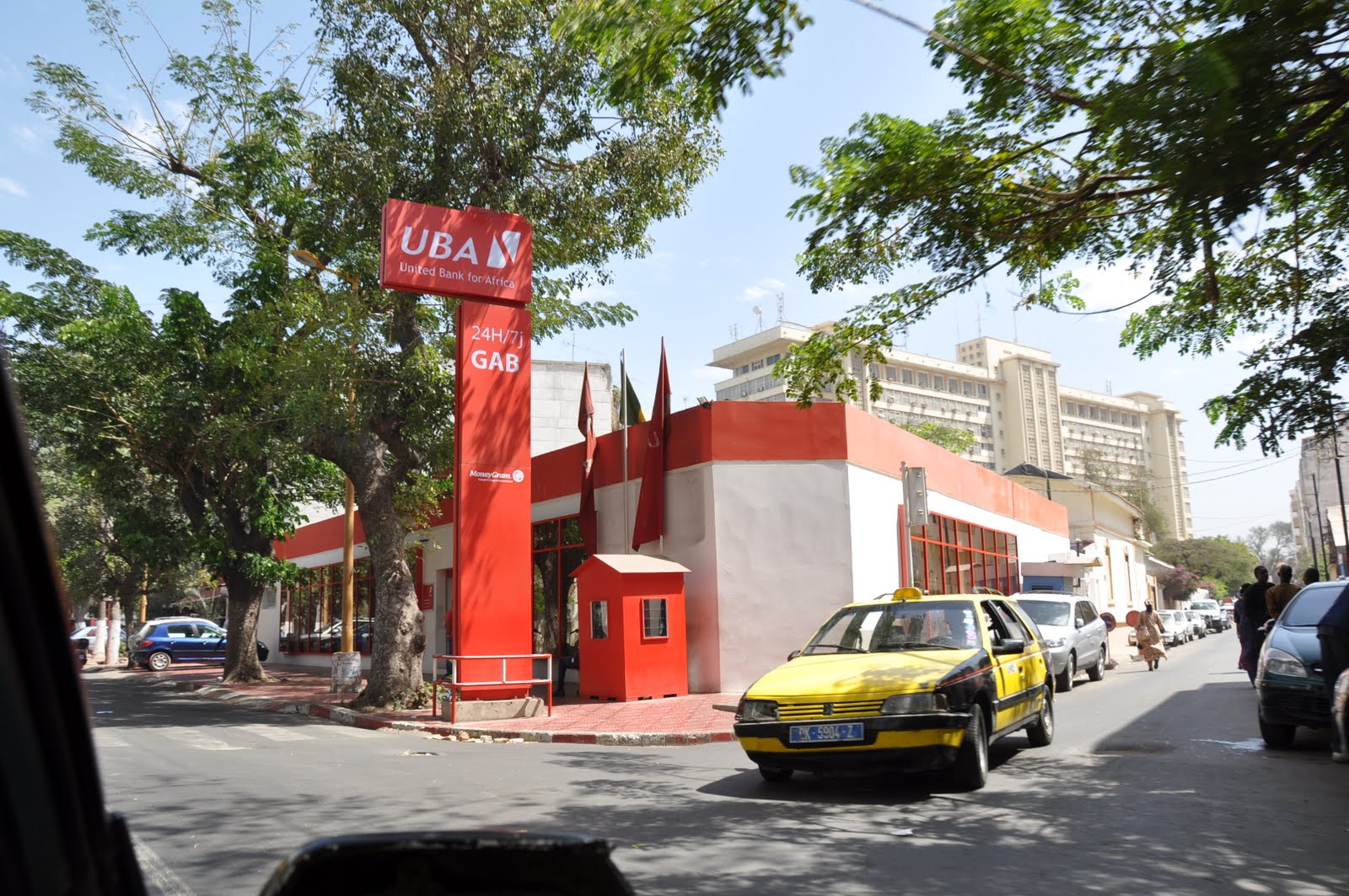
Dakar itself is a beautiful woman whom a first time visitor easily falls in love with. The streets are generally clean with impressive architecture that relies on its French heritage and I dare say that if one were to be blindfolded and dropped in the centre of town, one may be forgiven for thinking that it was a European city. In many places the roads are not big but they are effectively monitored to ensure that there is no traffic build up. And the high rise buildings are constructed with very good use of space so that there need not be fences taking over valuable space.

The people I came across were generally friendly. Being a French speaking country, it could be hard to get your message across but with my basic knowledge of the language gotten from spending several months at the Alliance Francaise in Accra, I did not have to suffer too much before getting my opinions across to waiters, taxi drivers, traders and policemen. After just returning from Lome where I had gone to report the Togolese presidential elections, a trip to Dakar was just what I needed to keep my new found opportunity to constantly practice my French. For every one who has ever learnt a language knows that the best way to go about it is to speak constantly for when there is nobody to speak with one readily forgets. So I did parler a lot to the consternation of many of the other Anglophone journos on the course.

One of the most memorable events that I will remember from my Dakar sojourn is that of visiting the Palais Presidentiel alongside colleagues from Nigeria, the Gambia and Liberia in the midnight. Being such an easy going people, the presidential castle is a tourist centre of sorts, one can take pictures in front of it during the day. Nevertheless, our first visit to the castle was at night and we were stopped by guards who demanded to know what our mission was. Our Gambian colleagues who share the Wolof tongue with the officials bailed us out. We were told to come back during the day if we wanted to get pictures of the beautiful white building. Entreaties from our Gambian friends fell on deaf ears. “Can you go to the house of Yayah Jammeh like this” asked the guard to which Musa Lammeh responded in the negative. They were very civil in turning us away. At that moment I thought about the fortress which our Aso Rock is at home and wondered if one could ever cross its many gates without an invitation.

So two days later we finally visit the palace again at the end of our interesting training programme that had been conducted by Barnaby Chesterman, a Rome-based reporter with the Agence France Presse, AFP. This time there was a guard who cut a solitary figure in his red and blue uniform, a gun strapped across his chest with a cavalier red top hat in front of the imposing almost 15 foot high metal gate that enclosed a palm tree lined path which led to the castle. He never smiled throughout as we took permission to take pictures with him. His sense of duty was so important that all he did was nod for us to go ahead. And we shot away, clicking our cameras like wide eyed tourists. It was a beautiful moment in time.

Perhaps most enchanting were the women of Dakar, dressed in their usual kaba, they looked splendid. It was of their enchanting beauty Senghor sang in his many poems in remembrance of his homeland.

Dakar is brimful of beautiful women for it is beauty personified. Walking down its streets sometimes felt like running a hand through the newly braided cornrows on a woman’s head. It was a journey of discovery. Contrary to Conrad’s description of Africa as being the "heart of darkness", Dakar and so many other cities on the continent do actually possess beauty that we all can be proud of.